
Books and papers
Publications: books, book chapters, peer reviewed papers
A selection of things that I have published over the the years, with links where available.
Nicoli, G., Pavon, G., Grayson, A., Emerson, A., Cortelazzo, M., & Mitra, S. (2023). Individuals with developmental disabilities make their own stylistic contributions to text written with physical facilitation. Frontiers in Child and Adolescent Psychiatry, 2. https://www.frontiersin.org/articles/10.3389/frcha.2023.1182884
Nicoli, G., Pavon, G., Grayson, A., Emerson, A., & Mitra, S. (2023). Touch may reduce cognitive load during assisted typing by individuals with developmental disabilities. Frontiers in Integrative Neuroscience, 17. https://www.frontiersin.org/articles/10.3389/fnint.2023.1181025
Iao, L. S., Belmonte, M. K., Dillon, G., Grayson, A., & Lamb, S. J. (2019). Atypical child development. In P. Banyard, C. Norman, G. Dillon, & B. Winder (Eds), Essential Psychology (3rd edn, pp. 467–488). Sage.
Grayson, A. (2019). Least dangerous assumption. In Wikipedia. https://en.wikipedia.org/w/index.php?title=Least_dangerous_assumption&oldid=928962479
Hocken, K., Winder, B., & Grayson, A. (2013). Putting responsivity into risk assessment: The use of the Structured Assessment of Risk and Need (SARN) with sexual offenders who have an intellectual disability. Journal of Intellectual Disabilities and Offending Behaviour, 4(3/4), 77–89.
Grayson, A., Emerson, A., Howard-Jones, P., & O’Neill, L. (2012). Hidden Communicative Competence: Case study evidence using eye-tracking and video analysis. Autism: The International Journal of Research & Practice, 16(1), 80–95. https://doi.org/10.1177/1362361310393260
Emerson, A., & Grayson, A. (2010). Facilitated Communication: The current ‘state of play’. Communication Matters, 24(2), 23–27.
Banyard, P., & Grayson, A. (2008). Introducing Psychological Research (Third Edition). Palgrave Macmillan.
Grayson, A. (2006). Autism and Developmental Psychology. In C. Wood, K. Littleton, & K. Sheehy (Eds), Developmental psychology in action. (pp. 144–192). Blackwell Publishing/Open University Press.
Grant, C. M., Boucher, J., Riggs, K. J., & Grayson, A. (2005). Moral understanding in children with autism. Autism, 9(3), 317–331.
Shaw, R., Grayson, A., & Lewis, V. (2005). Inhibition, ADHD, and computer games: The inhibitory performance of children with ADHD on computerized tasks and games. Journal of Attention Disorders, 8(4), 160–168. https://doi.org/10.1177/1087054705278771
Tzanidou, E., Petre, M., Minocha, S., & Grayson, A. (2005). Combining Eye Tracking and Conventional Techniques for Indications of User-Adaptability. Lecture Notes in Computer Science, 3585, 753.
Oates, J. M., Wood, C., & Grayson, A. (2005). Psychological development and early childhood. Blackwell Publishing/Open University Press.
Hughes, C., Graham, A., & Grayson, A. (2004). Executive functions in childhood: Development and disorder, in J. M. Oates & A. Grayson (Eds.), Cognitive and language development in children, pp. 205–230, Blackwell Publishing/Open University Press.
Mareschal, D., Johnson, M., & Grayson, A. (2004). Brain and cognitive development, in J. M. Oates & A. Grayson (Eds.), Cognitive and language development in children, pp. 113–153, Blackwell Publishing/Open University Press.
Oates, J. M., & Grayson, A. (2004). Cognitive and language development in children. Blackwell Publishing/Open University Press.
Oates, J. M., & Grayson, A. (2004). Perspectives on cognitive and language development, in J. M. Oates & A. Grayson (Eds.), Cognitive and language development in children, pp. 2–20. Blackwell Publishing/Open University Press.
McGlaughlin, A., & Grayson, A. (2003). A cross sectional and prospective study of crying in the first year of life. In S. P. Shohov (Ed.), Advances in Psychological Research (Vol. 22, pp. 53–74). Nova Science Publishers.
Grant, C. M., Grayson, A., & Boucher, J. (2001). Using tests of false belief with children with autism: How valid and reliable are they? Autism, 5(2), 135–145.
Emerson, A., Grayson, A., & Griffiths, A. (2001). Can’t or won’t? Evidence relating to authorship in facilitated communication. International Journal of Language & Communication Disorders, 36, 98–103.
Grayson, A., Clarke, D. D., & Miller, H. (2001). Students’ everyday problems: A systematic qualitative analysis (Invited update and reprint of 1995 paper) (P. Milner & S. Palmer, Eds; pp. 532–542). Sage.
McGlaughlin, A., & Grayson, A. (2001). Crying in the first year of infancy: Patterns and prevalence. Journal of Reproductive and Infant Psychology, 19(1), 47–59. https://doi.org/10.1080/02646830020032300
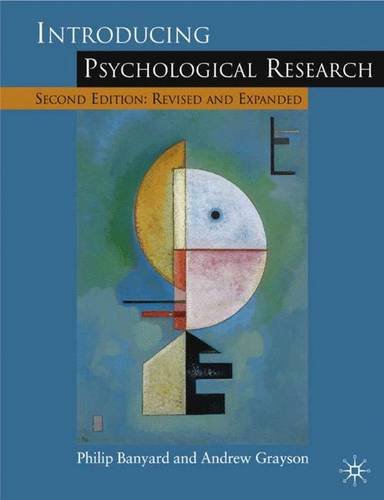
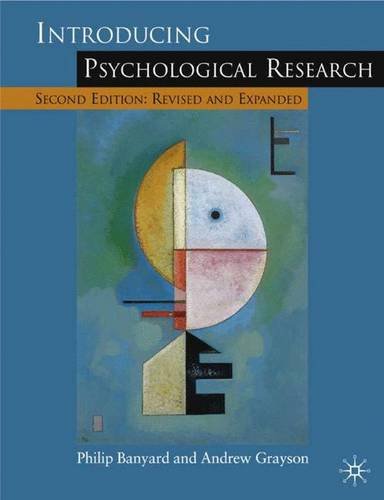
Banyard, P., & Grayson, A. (2000). Introducing Psychological Research (Second Edition). Palgrave Macmillan.
Grayson, A., & Banyard, P. (1999). Teaching with original sources (B. Perlman, L. I. McCann, & S. H. McFadden, Eds; pp. 29–35). American Psychological Society.
McGlaughlin, A., & Grayson, A. (1999). A prospective study of crying during the first year of infancy. Journal of Reproductive & Infant Psychology, 17(1), 41.
Emerson, A., Griffiths, A., Prentice, A., Cosham, T., Howard-Jones, P., & Grayson, A. (1998). Evaluation of facilitated communication. International Journal of Language & Communication Disorders, 33, 397–402.
Grayson, A., Clarke, D. D., & Miller, H. (1998). Help-seeking among students: Are lecturers seen as a potential source of help? Studies in Higher Education, 23(2), 143.
Banyard, P., & Grayson, A. (1998). Teaching introductory courses through the use of key research studies (D. Van Laar, D. Rose, & J. Radford, Eds; pp. 75–83). SEDA.
Grayson, A., Miller, H., & Clarke, D. D. (1998). Identifying barriers to help-seeking: A qualitative analysis of students’ preparedness to seek help from tutors. British Journal of Guidance & Counselling, 26(2), 237–253. https://doi.org/10.1080/03069889800760211
Grayson, A. (1997). Can the physical support given in facilitated communication interactions help to overcome problems associated with executive function? Living and Learning with Autism: The Individual, the Family and the Professional, 231–242.
Banyard, P., & Grayson, A. (1996). Introducing Psychological Research (First Edition). Palgrave Macmillan.
Grayson, A., Clarke, D. D., & Miller, H. (1995). Students’ everyday problems: A systematic qualitative analysis. Counselling, 6, 197–202.