Eyemouth history
Fishing and smuggling
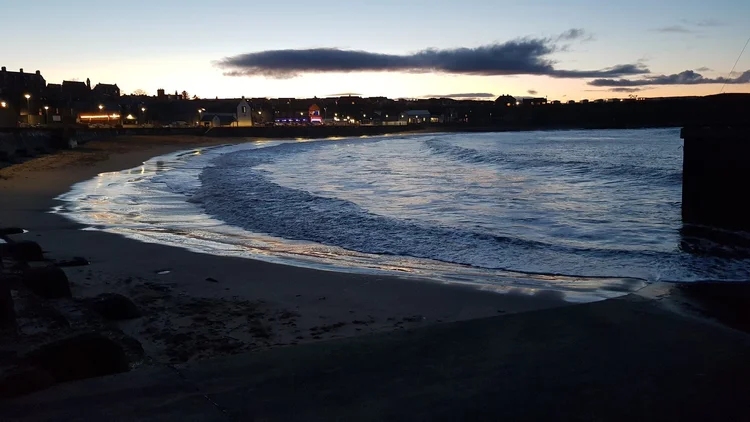
Eyemouth, of course, has a rich history. The most well-known aspects are the Eyemouth disaster of 1881 (so-called ‘Black Friday’) and smuggling. You can find out about the illegal tea trade at the excellent Gunsgreen House museum. It’s well worth a visit.
This blog post will be an ongoing project for us as we ourselves find out more about the rich heritage of the town. We want, for example, to find out more about the history of the fishing industry here (it’s very much tied up with herring) and about things like the Eyemouth to Burnmouth railway (shut under Beeching plan).
Smuggling
There is some suggestion that the very structure of the town was influenced by smuggling. The needs for concealment and escape meant that underground storage areas and ‘vennels’ (alleys, snickets, ginnels, tenfoots, gulleys—take your pick) were a feature of the developing architecture1.
Intriguingly, it was tea smuggling that was at the heart of it all. The East India Tea company had a monopoly on the trade, and taxes were high. So, John Nisbet built an empire2 around his residence, Gunsgreen House. Famously, the house was designed with cellars that opened out to the sea, and a hidden tea chute.
The Eyemouth disaster
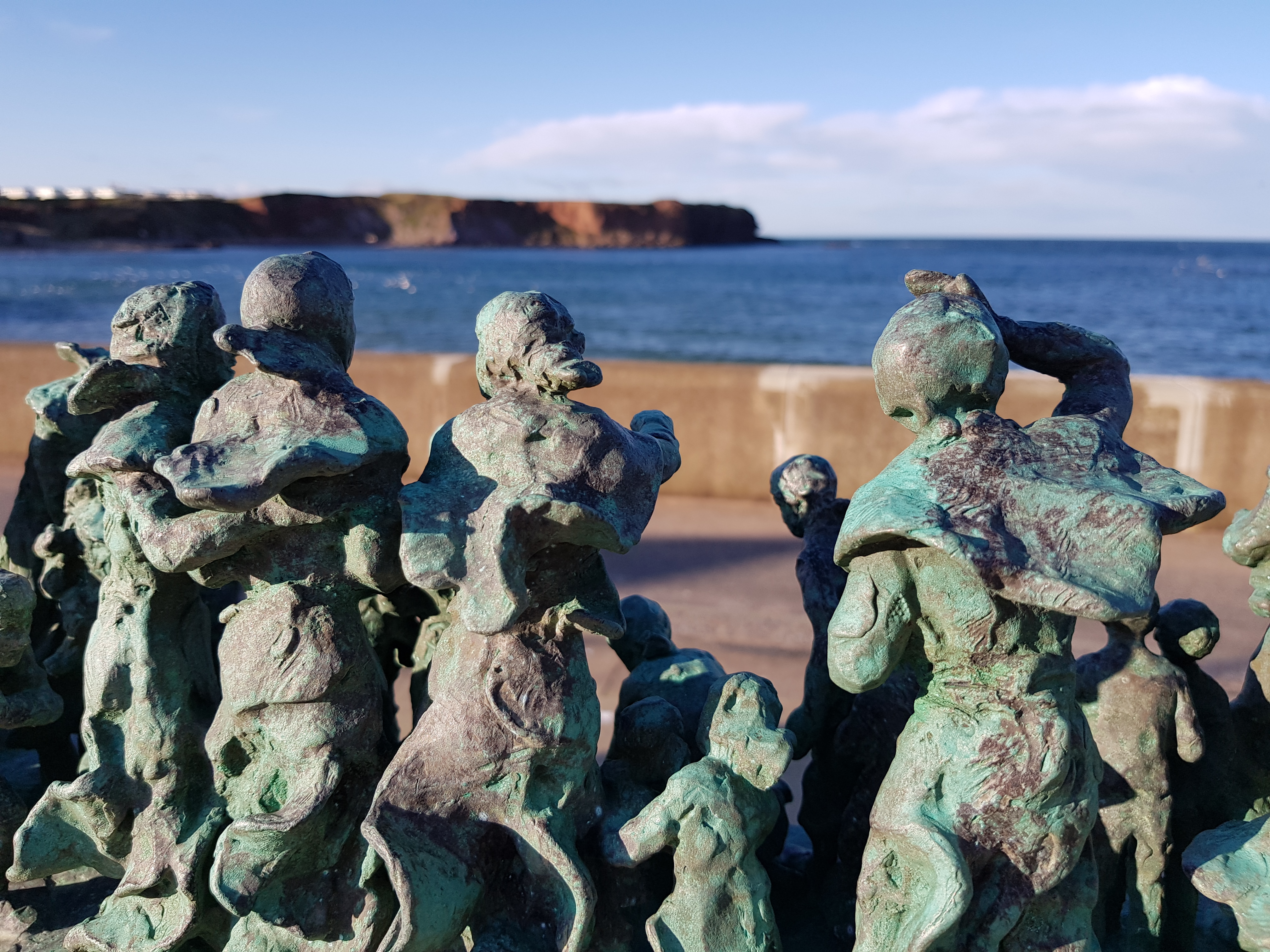
You can find out about the Eyemouth disaster of 14th October 1881 from various sources. And you will see the wonderful bronze sculpture by Jill Watson on the Bantry. It’s also difficult to miss the rather oddly posed representation of Willie Spears in the town centre.
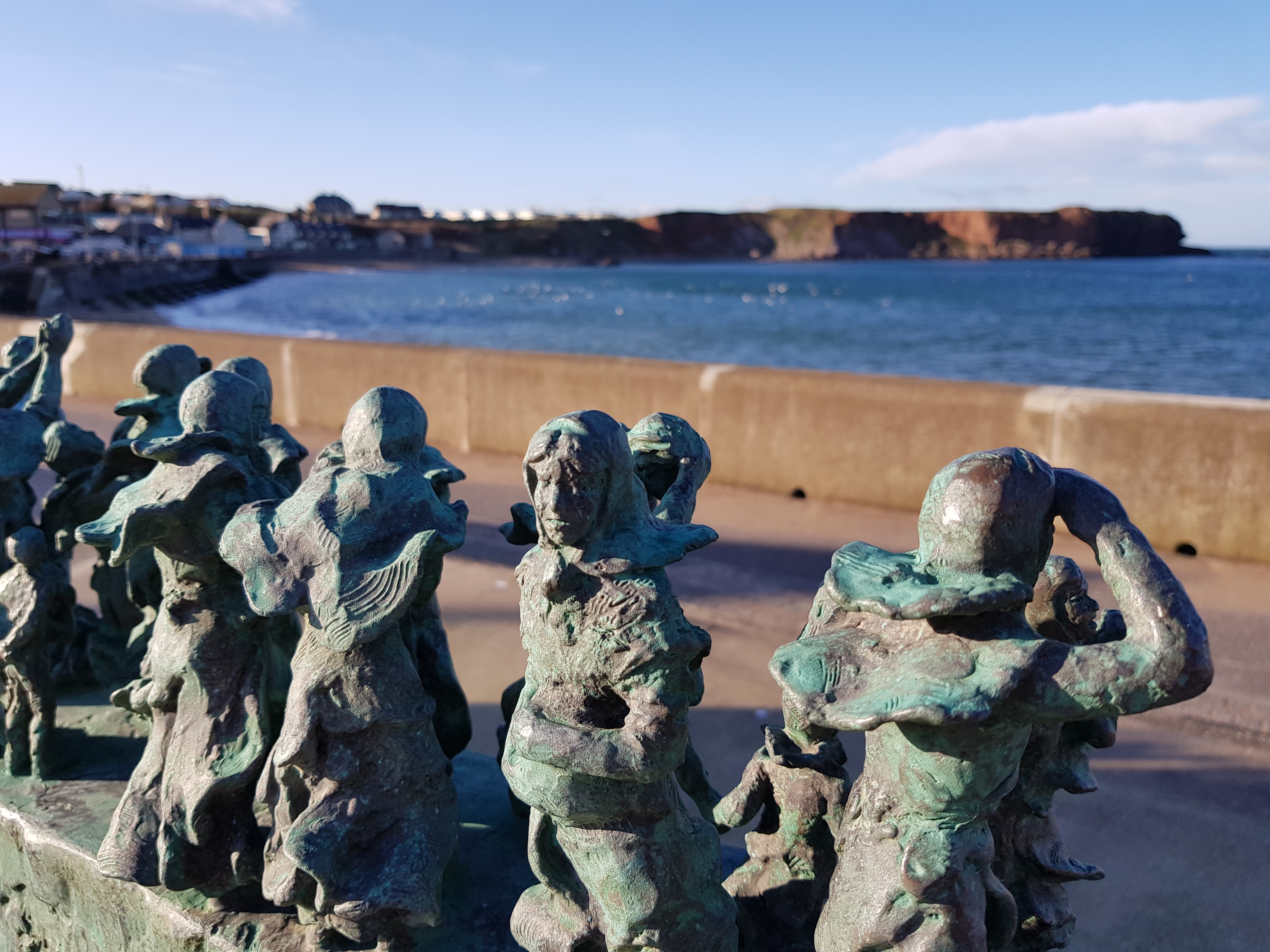
I’ve written a ‘triolet’ called The Hurkar Rocks. These are the rocks that are visible to the right-hand side of the bay as you look from the front of our house, just beyond the harbour walls. They were implicated in the Eyemouth disaster. A triolet is an eight-line poem with a very specific structure of repeated lines and rhyming pattern. We hope you might like to read it.
Eyemouth Railway
References
1 Smuggling on Scotland’s borders & east coast. (n.d.). Retrieved 20 May 2021, from http://www.smuggling.co.uk/gazetteer_scot_12.html
2 Janes, D. C. (2016). Fine Gottenburgh Teas: The import and distribution of smuggled tea in Scotland and the north of England c. 1750–1780. History of Retailing and Consumption, 2(3), 223–238. https://doi.org/10.1080/2373518X.2016.1262202